Do Heroin Addicts Have Triggers That Make Them Want to Use Again
Recovery from habit comes with a diversity of obstacles and challenges. One of them is dealing with the many physical and emotional cues that arise as people go through life, which results in the want to pick upward the substances they are trying to put downwardly for good. These cues are more normally known as "triggers," and they may manifest in completely different ways from person to person.
Some people experience a whirlwind of emotions when seeing quondam friends and loved ones, which can trigger the desire to have a drink. Other people may become then stressed out by the button to perform at school or work that they are tempted past the feelings produced by stimulants. No matter the cause, triggers are a natural part of recovery. Expecting triggers and planning to cope with them finer is the best way to defend against habit relapse.
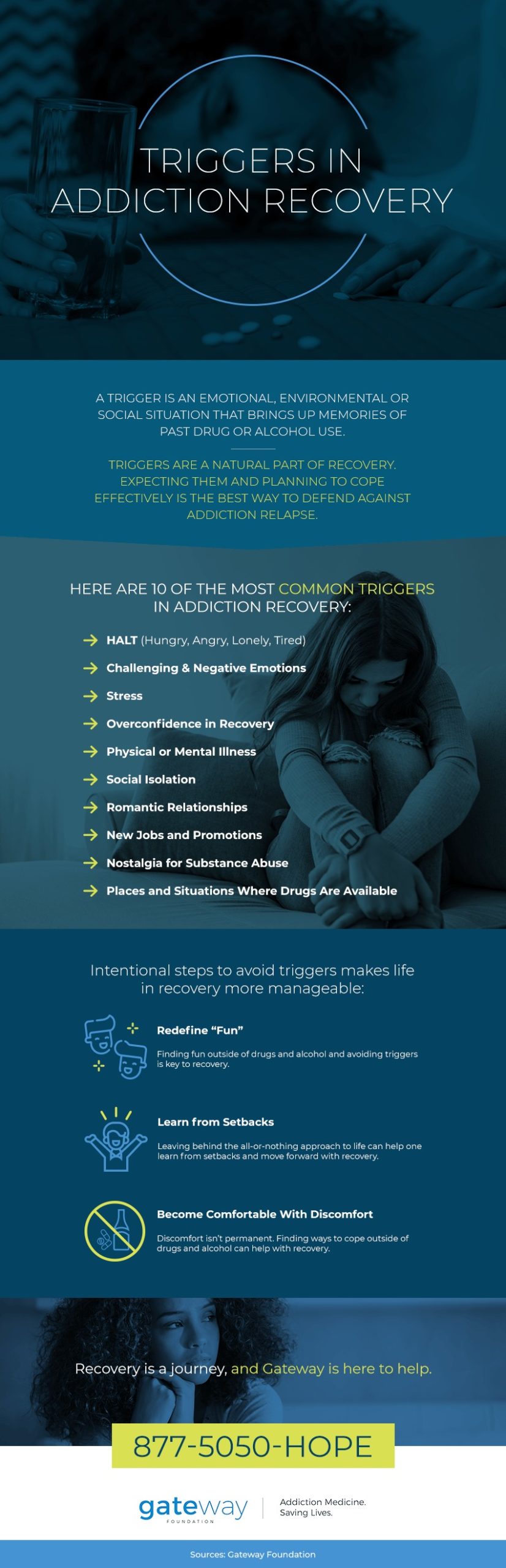
What Is an Addiction Trigger?
A trigger is an emotional, environmental or social situation that drags upwardly memories of drug or alcohol use in the past. These memories tin can stir up strong emotions that lead to the impulse to employ a substance again. Triggers do non necessarily lead to relapse, but they do brand it harder to resist the sudden cravings they produce.
Habit is a chronic encephalon illness with a relapse rate like to that of other chronic weather like diabetes. When people end their treatment plans for chronic conditions, they are more likely to relapse. Using drugs or booze over the long term builds associations betwixt a person'southward daily routine and their experiences with intoxication. Every bit a result, certain cues immediately flip the switch on the clan and actuate the craving reflex in response to external or internal triggers in recovery. Triggers may decrease in frequency the longer someone abstains from substance use, but anyone in recovery needs to exist prepared to reply appropriately when triggers do ascend.
 Mutual Relapse Triggers
There are many categories of addiction relapse triggers, and they fall into multiple groups. They can be emotional, ecology or mental, and often a trigger falls into multiple categories. These are 10 of the most mutual triggers in addiction recovery, along with quick tips on how to avoid them.
one. HALT: Hungry, Angry, Lone, Tired
The HALT acronym helps those in recovery go along an center on some of the most basic human needs that can atomic number 82 to or intensify triggers if non fulfilled. Beingness in any i of the HALT states reduces a person'southward ability to cope with stress and increases impulsivity.
Do your all-time to plan meals, engage in mindfulness, seek out social support and stick to a regular sleep schedule. Doing so will provide a baseline that helps reduce reactivity to triggers.
2. Challenging Emotions
Negative emotions like sadness, guilt or anger are often core reasons why people begin abusing substances in the first place. When these emotions ingather up once again during recovery, the encephalon remembers dealing with them using drugs or alcohol and prompts cravings.
No 1 tin can avoid negative emotions altogether. To keep emotions from triggering a relapse, people in recovery need to learn coping skills that tin can be discovered through therapy.
3. Stress
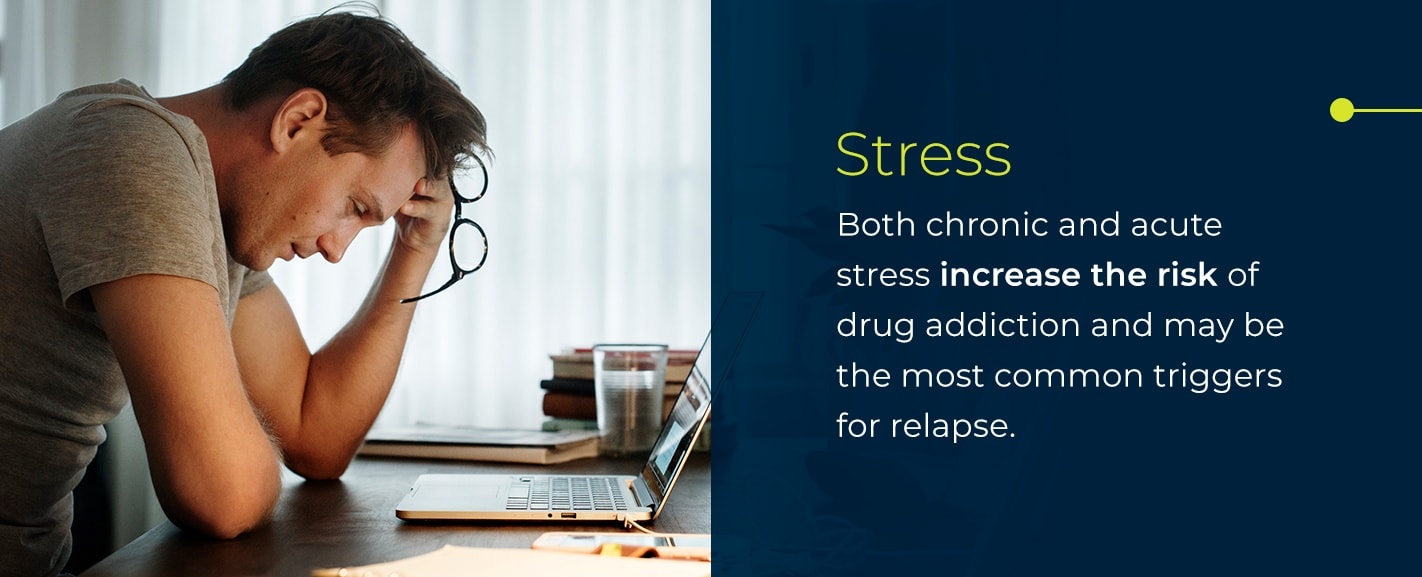
Both chronic and astute stress increment the adventure of drug addiction and may be the near common triggers for relapse. Stress is a role of daily life for most people, whether it'southward being tardily to piece of work in the morning or tense relations with a loved one. Health problems, increased responsibleness and other events tin outcome in stress that triggers drug cravings.
 The simply solution to stress is a combination of preventive self-intendance and employing coping skills whenever y'all showtime to experience overwhelmed.
iv. Over-Confidence in Recovery
Recovery is a journey with no end, yet some people brainstorm to feel that they are cured and don't have to worry about triggers anymore. It's important to develop a good for you level of self-confidence, just humility is necessary as well. If someone forgets that addiction is a chronic condition, they may be tempted to have "merely one" drink, injection, hit or bump with the expectation that information technology won't exist a big deal. This leads to riskier situations and eventually a full relapse.
 Staying off this slippery slope is the only mode to prevent over-confidence from resulting in relapse. Merely say no to whatever and all consumption of drugs or booze.
5. Concrete or Mental Illness
A variety of underlying mental illnesses like depression and anxiety are closely related to habit and can upshot in a person experiencing more than triggers or more powerful ones. Concrete disease and chronic hurting also stress the body and tin can increase the risk of relapse.
When you lot see a dr. or mental health specialist, permit them know that you lot are in recovery. Insisting on non-addictive prescriptions and alternatives to medication can aid eliminate a potential source of triggers.
6. Social Isolation
For many people, engaging socially and forming a support arrangement in recovery can feel exhausting. Some people will try to avoid it altogether, which can lead to prolonged isolation and mounting loneliness. Without other people effectually, it'due south easier to talk yourself into drug or booze utilise and rationalize it.
Struggling with social anxiety is mutual for people in recovery, so having a sponsor or trusted friend to turn to is a good first in avoiding isolation and its associated triggers.
7. Romantic Relationships
Anyone who has been through a breakup knows the emotional fortitude required to motility on with life. On top of the upheaval associated with addiction recovery, romantic relationships tin create devastating tides of emotion that brand a person feel lost an out of control — both powerful drug addiction relapse triggers. There is no demand to remain single forever, just actively choosing to avoid romantic relationships for at least the first twelvemonth of recovery is a good rule of thumb.
eight. New Jobs and Promotions
It's non just negative events that tin result in habit relapse triggers. Getting a new job or earning a promotion can trigger a relapse in a couple of different ways. For one, you might be tempted to use again "only this in one case" every bit a ways of celebrating. Planning sober festivities is one skilful way to stay on track.
At that place is too the stress and pressure associated with new or greater responsibilities. Having to acquire new skills and perform well in a new role can lead to anxiety and stress.
ix. Nostalgia for Substance Abuse
Addiction happens considering the use of drugs or alcohol makes a person experience amend in some way. Although someone in recovery knows that their addiction was harming themselves and those around them, it's adequately mutual to view by substance corruption through rose-colored glasses.
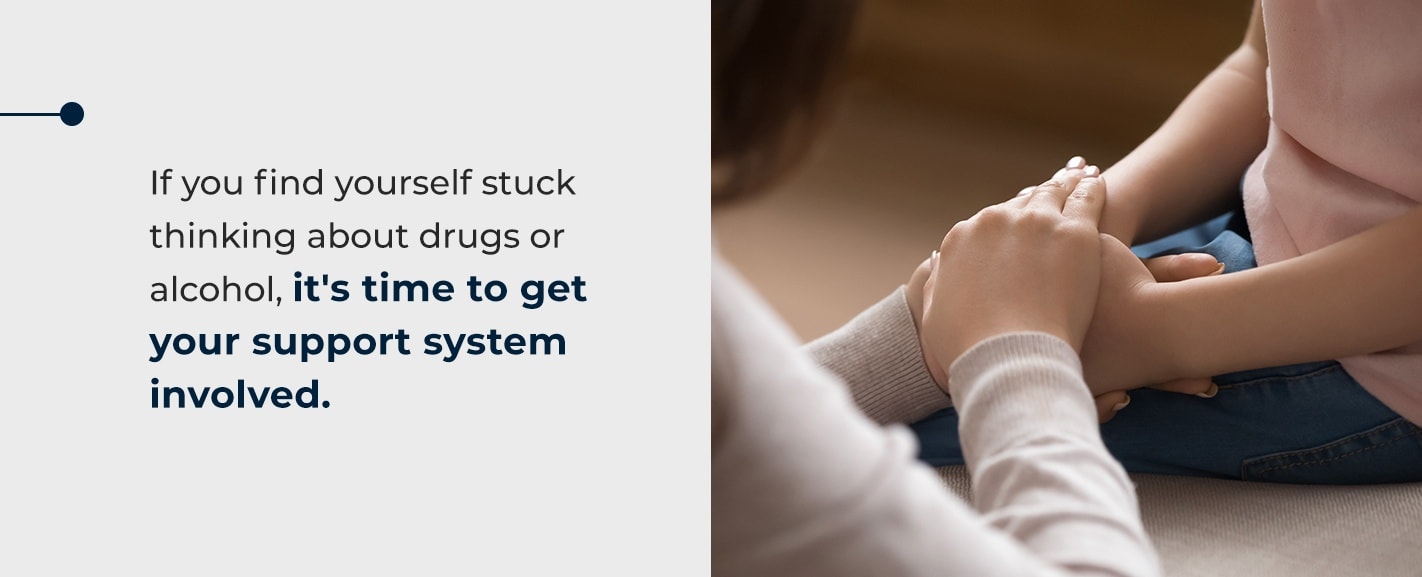
Reminiscing almost or dwelling on memories of by substance abuse is one of the brightest red flags in terms of triggers and relapse. If y'all notice yourself stuck thinking most drugs or alcohol, it's time to get your support organisation involved. Talk to a counselor, supportive friend or your sponsor to help remind you why you've chosen recovery.
 10. Places and Situations Where Drugs Are Bachelor
Information technology's non always piece of cake to avert being around substances of abuse. Alcohol is particularly hard because so many people view drinking as normal, and it tin can crop up in unexpected places like role parties or fifty-fifty a neighborhood potluck. Information technology's of import to make a listing of people, places and things that are significant triggers for yous so you can avert putting yourself in a situation that may back up relapse. Enlist the assistance of a friend, counselor or sponsor to get down the triggers yous may not think of right off the bat.
Identifying Triggers in Recovery
There are ii main types of triggers to be aware of — internal triggers and external triggers. External triggers are frequently easier to identify, as they are people, places, things and activities that make someone desire to utilize drugs or alcohol again. Internal triggers can be more hard to identify every bit they are feelings that are often complex.
1 important study examined the consequence of visual triggers in people who were former users of cocaine. Researchers showed the participants photos of cocaine and related situations and establish that the images resulted in a subconscious emotional response in the brain. The researchers observed a rapid activation of the pathways related to drug cravings.
These hidden responses and cues from the brain are particularly dangerous for people in recovery, equally they reinforce the desire to apply drugs or alcohol without the person fifty-fifty beingness aware of it. The researchers ended that avoiding people, places and objects that recall former substance abuse is crucial to maintaining recovery.
1. Other People
One of the hardest triggers to avoid is other people. Family and friends who employ substances put people in recovery in a perilous state of affairs where they may be tempted to accept a beverage or eat a drug. Even people who don't utilize illicit drugs can exist a trigger threat to someone in recovery. They might think it's okay to offer a drink to someone in recovery from addiction to another substance like heroin, not realizing that alcohol consumption may trigger a desire for a dissimilar type of intoxication.
 Additionally, many friends, family members and acquaintances merely don't understand how it feels to be in recovery and may make comments that trigger negative emotions. Some of the other people who may be triggering include:
- Erstwhile drug dealers
- Co-workers
- Employers
- Neighbors
- Spouses or partners
2. Physical Locations
A "high-risk" location is one that brings upward memories of time spent engaging in substance abuse. Driving past a bar you used to frequent or a neighborhood where y'all used to hang out with a friend can instantly spark a memory that you can't dismiss. The best course of activeness is to find alternate routes to the places you need to be, fugitive these concrete locations altogether. Information technology isn't always possible to avoid a location completely, only being more aware of your location triggers is beneficial. Some examples of places yous may need to road around include:
- Certain neighborhoods
- Friends' homes
- Bars or clubs
- Worksites
- Hotels
- Certain superhighway exits
- Downtown areas
3. Specific Objects
Our lives are filled with objects, and many of them may induce cravings for people in recovery. Something every bit simple as a spoon can exist a trigger for someone who used to apply heroin, for case. These are some of the things that can potentially trigger a person's drug or booze cravings:
- Furniture
- Cash or credit cards
- Empty pill bottles
- Ads on TV or in movies
- Drug paraphernalia
High-Risk Situations
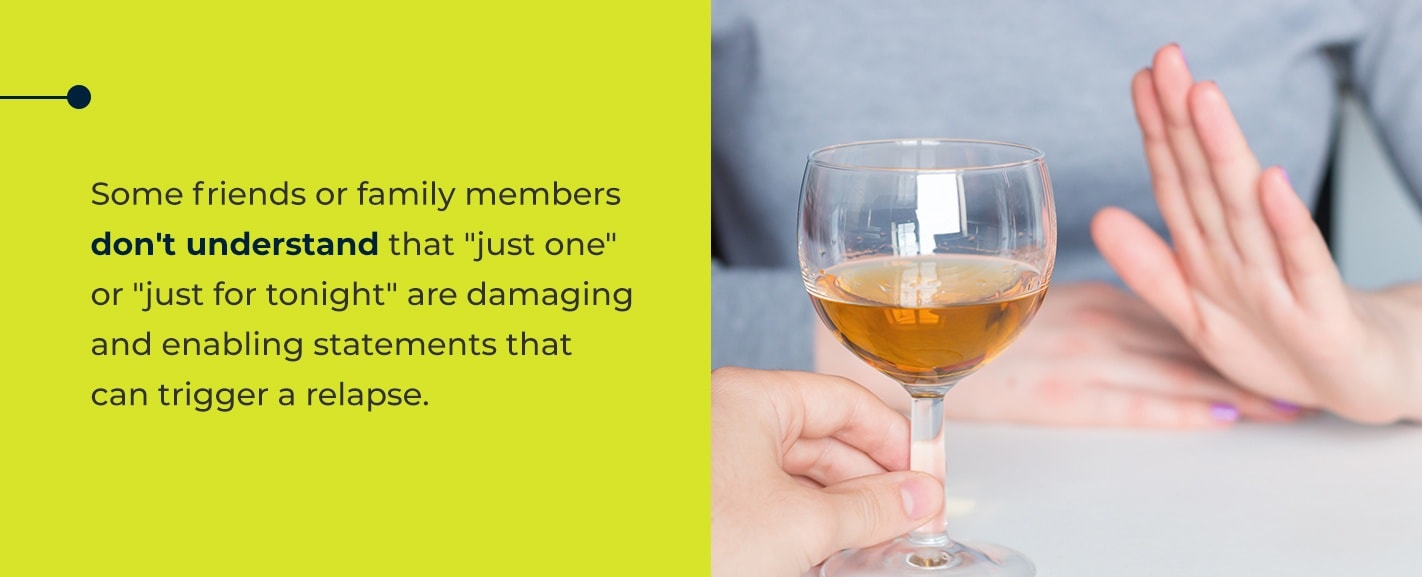
A loftier-risk situation involves stress that may push a person to want to use drugs or alcohol again. Events similar large holidays are triggers for many in recovery. While they are meant to be a reason to gather and celebrate, those in recovery must expend extra energy to ensure they are coping well with gatherings that involve social drinking, for instance. Some people take to deal with friends or family members who don't empathise that "just ane" or "just for tonight" are dissentious and enabling statements that can trigger a relapse.
Scheduling tin can also get stressful, as patients in treatment or aftercare may think about skipping therapy or back up group meetings to nourish family events they consider obligatory. The holidays also stand for a break in routine that can influence a person's desire to employ a substance.
Many situations may be loftier-hazard for i person and fine for another. The important matter is to recognize situations that cause stress and ready strategies to mitigate it.
How to Avert Triggers in the First Place
Relapse prevention means taking intentional steps in avoiding triggers. These iii actions can assist people in recovery re-frame their mindset then triggers are less intense and more than manageable.
ane. Redefine "Fun"
For many people, drug and alcohol apply began as a way to alleviate boredom or make certain activities feel more fun. Those in recovery often have a difficult time finding new means to have fun, and it may cause them to glamorize or ruminate on their past substance corruption. Recovery is hard work and drug use feels like shooting fish in a barrel, and this can make people feel similar their efforts oasis't been worth information technology. Therapy can help people overcome the cerebral challenge of acknowledging the difficulty of recovery simply realizing that sustaining an addiction is far harder.
2. Acquire From Setbacks
Everyone faces setbacks in recovery. It'south central to remember that these are not failures and shouldn't be termed equally such. Obstacles in recovery are oft caused by bereft coping skills or an inability to plan finer. These issues can be fixed, and people should learn to challenge their outlook past giving equal attention to by successes.
Global statements like "This action proves I am a failure" are harmful and can crusade negative feelings that trigger a relapse. Leaving behind the all-or-nothing approach helps people take a more rounded view of their recovery and limit reactionary emotions.
 iii. Become Comfy With Discomfort
Addiction often develops considering people employ drugs or alcohol to feel better nigh their electric current state of affairs. Whether it's a new and stressful event or a sorry emotional state, substance corruption often turns off feelings of discomfort. In recovery, people don't have that option and oft struggle to accept and process negative feelings.
Those in recovery need to learn that feeling uncomfortable is non a state that needs remediation. Coping methods learned in therapy help people remain grounded and reduce the peckish for the escapism of substance corruption.
Recognizing the Stages of Relapse
Relapse is oft viewed as the event of a sudden impulse, but in that location is actually a litany of warning signs that can show when someone is at escalating run a risk of using drugs or alcohol over again. Relapse can be divided into three stages, each with specific signs.
i. Emotional Relapse
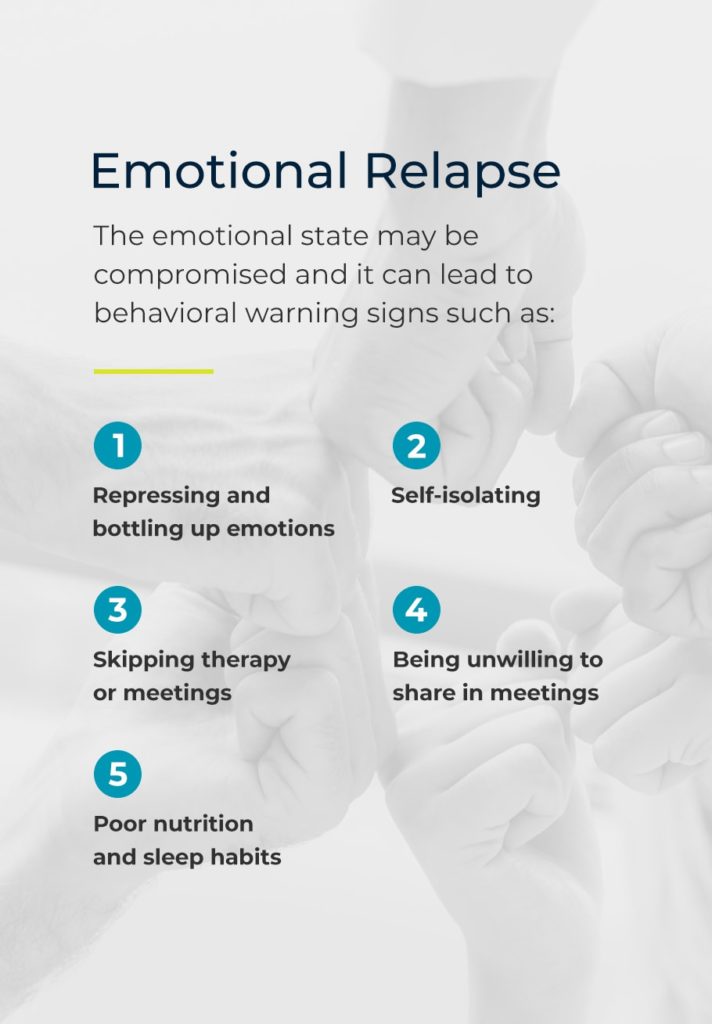
At first, people are not actively considering a return to drugs or alcohol. The last time the person drank or used is still fresh enough in the mind that they recollect the consequences and don't want to repeat it. However, their emotional land may be compromised and this can lead to behavioral alert signs such as:
- Repressing and bottling upwardly emotions
- Cocky-isolating
- Skipping therapy or meetings
- Beingness unwilling to share in meetings
- Poor nutrition and slumber habits
2. Physical Relapse
If a person isn't equipped with effective coping skills or neglects to utilize them to their full potential, the likelihood of acting on their urges increases. The last stage of relapse is the i most people think of showtime — returning to the use of drugs or alcohol.
A relapse may consist of one single utilize followed by a realization of the mistake, while others may last whatsoever length of time.
3. Mental Relapse
Afterwards a period of poor cocky-care, someone in recovery will likely experience some of the mental signs of relapse. They may begin to feel discontent with their progress and restless in their disintegrating routine. Without the proper structure and routine, a person is more likely to start thinking about using again.
A person may starting time making a pros and cons list to endeavor to rationalize using over again and be on the fence about whether they will practise so. Just the person in recovery can recognize their own signs of mental relapse, including:
- Cravings for drugs or alcohol
- Excessive thinking near people, places or things linked to former use
- Glamorizing or minimizing the consequences of sometime employ
- Lying and bargaining
- Coming up with means to "command" future use
- Looking for opportunities to use
- Fantasizing about or planning for a relapse
What to Do in Example of a Relapse
Relapse is not synonymous with failure. Information technology helps to compare habit relapse to relapse in other chronic conditions. A person with diabetes will often relapse due to poor eating behaviors, for example. If someone with diabetes relapses, they haven't failed. They just have to reset, practice healthy eating and get their blood sugar nether control with the aid of their doctor.
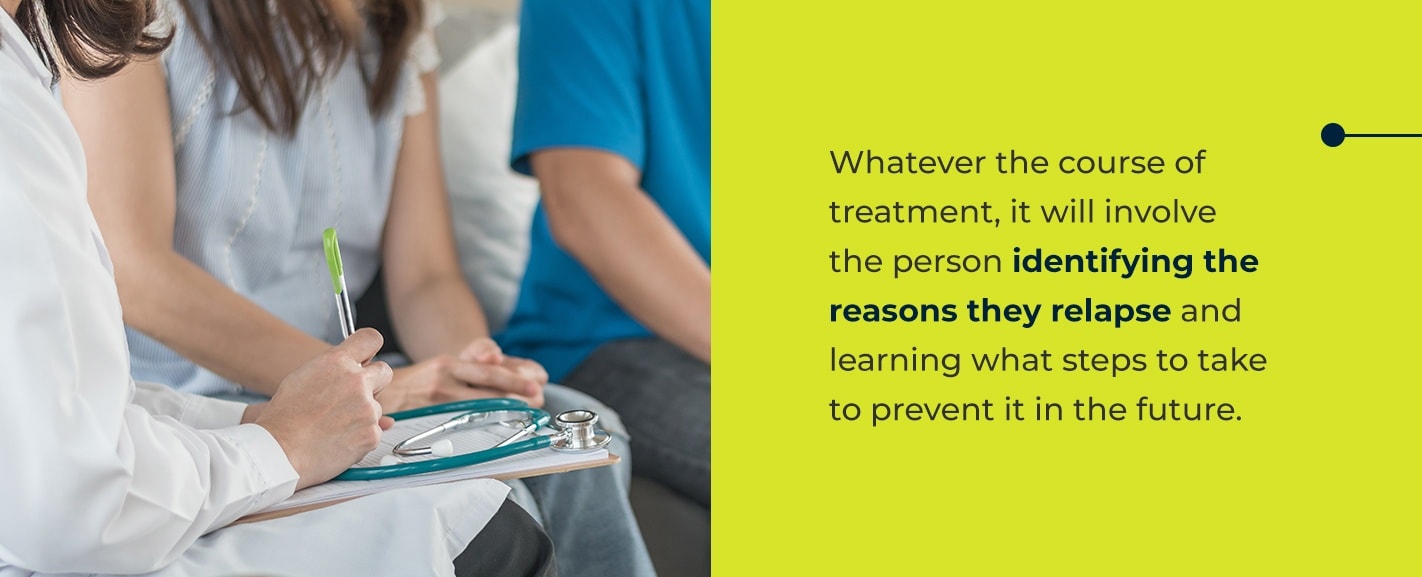
Addiction relapses are similar in that the individual needs to seek treatment to get back on track. To overcome withdrawal symptoms, most people need some form of detoxification or withdrawal management service. A long-term, severe relapse might require residential treatment, while people with prior experience in a treatment program may do well with outpatient therapy. Whatever the form of treatment, it volition involve the person identifying the reasons they relapse and learning what steps to take to prevent it in the futurity.
 If yous or someone you know relapses, the nigh important thing to practice is ensure safety. Drug and alcohol tolerance may decrease in recovery, so someone who has been sober for months and uses the same amount of a substance they used earlier treatment may be at risk of overdose. If you suspect overdose is possible, phone call 911 correct away. If the relapse does non seem life-threatening, contacting a sponsor, therapist or trusted loved ane is the next matter to do.
Coping Mechanisms for Recovery
Avoiding triggers is only one part of the puzzle when it comes to habit and recovery. As nosotros've mentioned a few times, it'due south of import to larn healthy coping mechanisms to help yous handle yourself if y'all happen to see ane of your triggers while you're out in the world. Avoiding all of your triggers isn't always an option, but running into i when you're going about your daily business concern doesn't necessarily have to trigger a relapse. Hither'south a quick rundown of some of our favorite coping mechanisms.
ane. Maintain a Support System
Recovery isn't a journey that you have to take yourself. Make it a point to maintain a comprehensive support system. This could include family unit, friends, sponsors or other members of your addiction recovery community, just to name a few people. These need to be people that you'll experience comfy calling on if you lot run into one of your triggers out in the world and need someone to talk to as a tool to help prevent relapse.
Y'all don't fifty-fifty have to talk to your support people in person. Send them a text bulletin or Facetime them until the urge to relapse passes. Technology gives u.s. the tools to stay connected to our support groups even if they're not in the same fourth dimension zone.
two. Take Steps to Distract Yourself
Another useful side effect of our engineering science-steeped society is that lark is easy to come by. If you encounter a trigger in the wild, distract yourself. Pull up a video on YouTube, play a mobile game or ringlet social media until y'all tin can become away from the trigger.
You might exist worried that this distraction tactic might come across every bit rude if you lot're out in public. Don't. At that place's zippo rude about taking care of yourself and avoiding triggers that could lead to a relapse.
three. Talk To Yourself
Self-talk is a powerful tool and a valuable coping mechanism if you encounter ane of your triggers during your daily life. Instead of allowing the trigger to overcome yous, talk to yourself logically. Explain to yourself that you recognize the trigger, you're taking steps to remove yourself from the situation and you don't allow the trigger to accept any power over you.
It sounds featherbrained only sometimes that little bit of assurance — even if it's coming from your own lips — can be enough to keep the trigger from causing bug.
four. Practice Relaxation
Stress is a large trigger for a lot of people. Every bit before long as things showtime getting difficult, it's tempting to turn back to addiction. Instead, learn how to practice relaxation, and how to be relaxed in whatsoever and every state of affairs. Learning good for you means to approach your stressors is more than than only preventing information technology from triggering you — it can too help improve your overall physical and mental health by reducing the amount of stress you experience on a daily ground.
Continue in heed that while these are popular coping mechanisms, they might not work for everyone. Accept the time to figure out what works best for you lot as part of your personal recovery journey.
Reinforce Recovery at Gateway
Gateway is a comprehensive addiction handling center with more than than 50 years of experience providing patients with the tools they need to identify and minimize triggers in substance abuse recovery. Recovery is a journey, and Gateway is here to help guide you on the path — we are with you for life. To learn more about our personalized, evidence-based approach to addiction treatment call Gateway at (877) 505-4673 or contact the states online.
Source: https://www.gatewayfoundation.org/addiction-blog/triggers-in-addiction-recovery/

Postar um comentário for "Do Heroin Addicts Have Triggers That Make Them Want to Use Again"